Facing reality in the mobile industry
Three mobile-related news items caught my eye today.
Welcome to the real world
The first item was the least important. Skype CEO Niklas Zennstrom talked about getting his software on mobile phones:
"When we began developing the mobile-phone version, we didn't realize the number of technical obstacles. It is challenging and is taking much longer than expected."
Well, duh. There are a couple of ways you could use Skype on a mobile phone. One is to establish an data connection via 3G and then use the data channel to make a call. The operators tend to be a tad wary of that because it basically cuts off most of their revenue.
Then there are WiFi phones. The difficulties there include dreadfully short standby battery life (because 802.11 uses much more power to maintain presence than a cellular network does) and endless difficulties handing off a call seamlessly between a WiFi network and a cellular network. (Someone in the industry once told me confidently that the solution is to pre-emptively establish a connection to the cellular network anytime the user gets close to the edge of the WiFi network. Problem: you're almost always at the edge of the WiFi network unless you're sitting on the transmitter. So basically your phone will almost always be making two calls at once.) Pairing to the diversity of WiFi base stations out there is also a lot tougher than many people realize. Plus many of the operators don't want mixed WiFi/mobile devices to succeed because they weaken the operators' control.
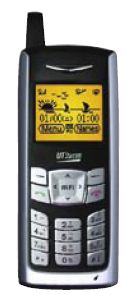
Oh, and the first WiFi phones are butt-ugly.
The tech industry is excited about WiFi mobile phones because it wants somebody to make the operators disappear. I'm fine with that, and I like Skype (I'm a user). But you've got to differentiate between the technologies you want to be real and the ones that actually are.
My guess is that, especially in the US, we'll see WiFi phones sell in volume first as cordless phones in the home, where you don't expect to roam and a lot of people already have WiFi base stations. I could maybe picture them on college campuses, which often have very broad WiFi networks and a lot of students anxious to make cheap calls. In Europe, there is more possibility for dual cellular/WiFi phones because they can be sold aftermarket, bypassing the operators. But you still have to deal with the handoff and pairing issues.
If you want to replace a mobile phone for the mass market, you have to come pretty close to the usability and mobility of today's mobile phones. That will be very, very, very hard to achieve with WiFi.
Tragic but not surprising
I'm seeing almost no coverage of this in the US tech press, but Benq announced that it's closing down the mobile phone business that it acquired from Siemens, just one year and 29 days after the deal closed. At the time of the deal, the combined companies were the fourth largest mobile phone company in the world.
Siemens once had huge ambitions in mobile phones, but it never seemed to find a clear market identity. It was one of the few mobile phone companies to license Series 60 from Nokia (a disaster), and it launched a very aggressive campaign to create a line of fashion designer phones (another disaster).
Outside of Germany (where the Siemens brand is very well respected) the company was mostly known as a supplier of low-cost mobile phones. When Nokia decided to take back market share by leveraging its high production volumes to cut prices, Siemens went into a death spiral from which it never recovered. The mobile phone unit was already in deep financial trouble when Siemens sold it, and in fact they basically paid Benq 250 million euros to take the business off their hands. (Benq had to assume some of the contract liabilities to Siemens' German work force, and supposedly agreed not to do layoffs in the Siemens mobile phone business for one year.)
Apparently the Siemens mobile business continued to decline in the year after the deal, and the press release from Benq was amazingly blunt:
"Both revenue and margin development will fall far short of expectations in the important Christmas quarter. [Mike's translation: The operators refuse to sell our stuff; that's how we know in September that we're going to have a bad Christmas]. Due to the discontinuation of further financial support from the parent company, BenQ [Translation: We have thrown too much money into this thing already], and the resulting lack of liquidity and implicated disruption to business [our mobile division is flat out of cash], BenQ Mobile in Germany will file for insolvency at the local court in Munich within the next few days [We're laying off everyone, selling the buildings they work in, and stiffing as many creditors as we can. But we'll keep using the Siemens-Benq brand for another four years, because we get to do that under the terms of our deal.]"
The situation is sad for the former Siemens employees, and sad for Benq's ambitions. A year ago the phone ODMs (manufacturers who don't sell under their own names) were supposedly about to turn themselves into the masters of the mobile phone industry, with Benq leading the way. Now Nokia, SonyEricsson, and Motorola are all on the rebound.
I'll close with comments by Richard Windsor, a very brainy investment analyst with Nomura in London:
"BenQ has effectively signalled the end of its mobile phone business.... Handset delays, testing and acceptance problems have prevented devices getting to market on time which has proved catastrophic for revenues, profits and cash flow.... There can be little doubt that this is the end of the road for BenQ's ambitions to become a branded handset manufacturer.... We expect that Nokia will get the lion's share of BenQ's business as BenQ has remained mostly in the low end where Nokia is by far the strongest.... Negative for Symbian as yet another licensee appears to have gone up in smoke, dealing its credibility as an impendent software vendor a blow. Negative for the Linux consortium as BenQ's long-term feature phone roadmap looked like it was heading towards Linux and the consortium is now deprived of a credible member."
Not sure if it's tragic, but it's ominous
The other sad but not surprising end was the abrupt discontinuation of Mobile ESPN, the MVNO focused on sports fans. (An MVNO is a mobile phone operator that buys air time from one of the big operators, pairs it with specialized phones and services, and sells the bundle to the public.) I thought Mobile ESPN's phone interface had huge flaws, but most observers are attributing the failure to bad marketing or just a general failure of the MVNO concept.
A lot of nasty rumors had been circulating about Mobile ESPN, which is why the shutdown was not surprising. At CTIA earlier this month I spoke with one well-connected industry insider who was furious about the situation. He said it's unreasonable to expect a new MVNO to find its market immediately.
He had a point. I strongly believe in the idea of MVNOs, because they enable an operator to focus on vertical solutions for vertical markets, which is the way most mobile data usage will develop. I think Mobile ESPN was poorly implemented. But other MVNOs are more promising (Helio remains my favorite example). I hope they'll be given enough time to prove themselves.
A year ago MVNOs were supposed to be the next big thing in the operator world. Now many people are trashing them. This is typical of the faddish, short-term behavior of the mobile industry. When you have no vision of your own, you jump on whatever idea is trendy at the moment. MMS. WAP. And now MVNOs. The industry often behaves like a flock of birds – it doesn't really matter where you go, as long as you don't get separated from the others.
Welcome to the real world
The first item was the least important. Skype CEO Niklas Zennstrom talked about getting his software on mobile phones:
"When we began developing the mobile-phone version, we didn't realize the number of technical obstacles. It is challenging and is taking much longer than expected."
Well, duh. There are a couple of ways you could use Skype on a mobile phone. One is to establish an data connection via 3G and then use the data channel to make a call. The operators tend to be a tad wary of that because it basically cuts off most of their revenue.
Then there are WiFi phones. The difficulties there include dreadfully short standby battery life (because 802.11 uses much more power to maintain presence than a cellular network does) and endless difficulties handing off a call seamlessly between a WiFi network and a cellular network. (Someone in the industry once told me confidently that the solution is to pre-emptively establish a connection to the cellular network anytime the user gets close to the edge of the WiFi network. Problem: you're almost always at the edge of the WiFi network unless you're sitting on the transmitter. So basically your phone will almost always be making two calls at once.) Pairing to the diversity of WiFi base stations out there is also a lot tougher than many people realize. Plus many of the operators don't want mixed WiFi/mobile devices to succeed because they weaken the operators' control.
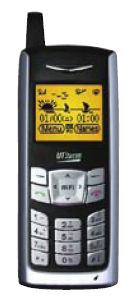
Oh, and the first WiFi phones are butt-ugly.
The tech industry is excited about WiFi mobile phones because it wants somebody to make the operators disappear. I'm fine with that, and I like Skype (I'm a user). But you've got to differentiate between the technologies you want to be real and the ones that actually are.
My guess is that, especially in the US, we'll see WiFi phones sell in volume first as cordless phones in the home, where you don't expect to roam and a lot of people already have WiFi base stations. I could maybe picture them on college campuses, which often have very broad WiFi networks and a lot of students anxious to make cheap calls. In Europe, there is more possibility for dual cellular/WiFi phones because they can be sold aftermarket, bypassing the operators. But you still have to deal with the handoff and pairing issues.
If you want to replace a mobile phone for the mass market, you have to come pretty close to the usability and mobility of today's mobile phones. That will be very, very, very hard to achieve with WiFi.
Tragic but not surprising
I'm seeing almost no coverage of this in the US tech press, but Benq announced that it's closing down the mobile phone business that it acquired from Siemens, just one year and 29 days after the deal closed. At the time of the deal, the combined companies were the fourth largest mobile phone company in the world.
Siemens once had huge ambitions in mobile phones, but it never seemed to find a clear market identity. It was one of the few mobile phone companies to license Series 60 from Nokia (a disaster), and it launched a very aggressive campaign to create a line of fashion designer phones (another disaster).
Outside of Germany (where the Siemens brand is very well respected) the company was mostly known as a supplier of low-cost mobile phones. When Nokia decided to take back market share by leveraging its high production volumes to cut prices, Siemens went into a death spiral from which it never recovered. The mobile phone unit was already in deep financial trouble when Siemens sold it, and in fact they basically paid Benq 250 million euros to take the business off their hands. (Benq had to assume some of the contract liabilities to Siemens' German work force, and supposedly agreed not to do layoffs in the Siemens mobile phone business for one year.)
Apparently the Siemens mobile business continued to decline in the year after the deal, and the press release from Benq was amazingly blunt:
"Both revenue and margin development will fall far short of expectations in the important Christmas quarter. [Mike's translation: The operators refuse to sell our stuff; that's how we know in September that we're going to have a bad Christmas]. Due to the discontinuation of further financial support from the parent company, BenQ [Translation: We have thrown too much money into this thing already], and the resulting lack of liquidity and implicated disruption to business [our mobile division is flat out of cash], BenQ Mobile in Germany will file for insolvency at the local court in Munich within the next few days [We're laying off everyone, selling the buildings they work in, and stiffing as many creditors as we can. But we'll keep using the Siemens-Benq brand for another four years, because we get to do that under the terms of our deal.]"
The situation is sad for the former Siemens employees, and sad for Benq's ambitions. A year ago the phone ODMs (manufacturers who don't sell under their own names) were supposedly about to turn themselves into the masters of the mobile phone industry, with Benq leading the way. Now Nokia, SonyEricsson, and Motorola are all on the rebound.
I'll close with comments by Richard Windsor, a very brainy investment analyst with Nomura in London:
"BenQ has effectively signalled the end of its mobile phone business.... Handset delays, testing and acceptance problems have prevented devices getting to market on time which has proved catastrophic for revenues, profits and cash flow.... There can be little doubt that this is the end of the road for BenQ's ambitions to become a branded handset manufacturer.... We expect that Nokia will get the lion's share of BenQ's business as BenQ has remained mostly in the low end where Nokia is by far the strongest.... Negative for Symbian as yet another licensee appears to have gone up in smoke, dealing its credibility as an impendent software vendor a blow. Negative for the Linux consortium as BenQ's long-term feature phone roadmap looked like it was heading towards Linux and the consortium is now deprived of a credible member."
Not sure if it's tragic, but it's ominous
The other sad but not surprising end was the abrupt discontinuation of Mobile ESPN, the MVNO focused on sports fans. (An MVNO is a mobile phone operator that buys air time from one of the big operators, pairs it with specialized phones and services, and sells the bundle to the public.) I thought Mobile ESPN's phone interface had huge flaws, but most observers are attributing the failure to bad marketing or just a general failure of the MVNO concept.
A lot of nasty rumors had been circulating about Mobile ESPN, which is why the shutdown was not surprising. At CTIA earlier this month I spoke with one well-connected industry insider who was furious about the situation. He said it's unreasonable to expect a new MVNO to find its market immediately.
He had a point. I strongly believe in the idea of MVNOs, because they enable an operator to focus on vertical solutions for vertical markets, which is the way most mobile data usage will develop. I think Mobile ESPN was poorly implemented. But other MVNOs are more promising (Helio remains my favorite example). I hope they'll be given enough time to prove themselves.
A year ago MVNOs were supposed to be the next big thing in the operator world. Now many people are trashing them. This is typical of the faddish, short-term behavior of the mobile industry. When you have no vision of your own, you jump on whatever idea is trendy at the moment. MMS. WAP. And now MVNOs. The industry often behaves like a flock of birds – it doesn't really matter where you go, as long as you don't get separated from the others.


